Driveways, patios and walkways in paver stone, set on a compacted base — in Mesa and all around it.
Almost everything that decides whether a paver driveway is still flat in a few summers is buried under it before the first stone goes down. Primos Landscaping digs the area out to depth, builds the aggregate base back up in compacted lifts, screeds a bed of sand over that, and only then starts laying pattern. The stone is the part the neighbours notice. The base is the part that does the work.
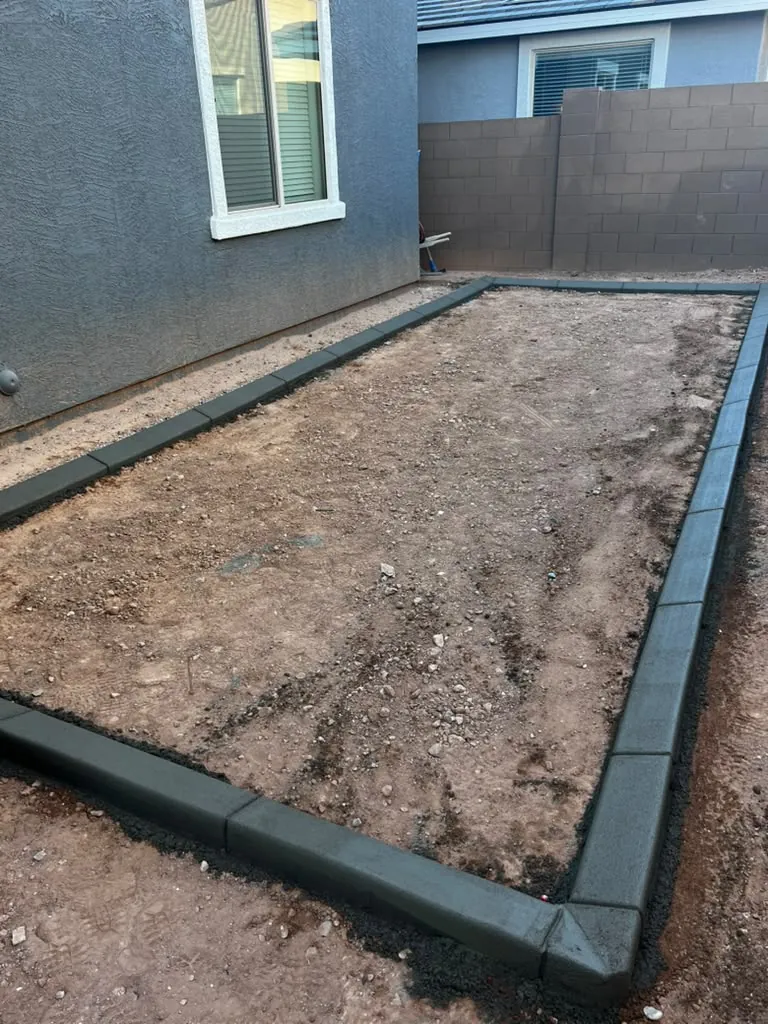
The same build goes under back patios, front walks, courtyard aprons and the strip between a gate and a shed — with edge restraint pinned along every open side, because pavers with nothing holding the perimeter creep outward and the joints open up one winter at a time.
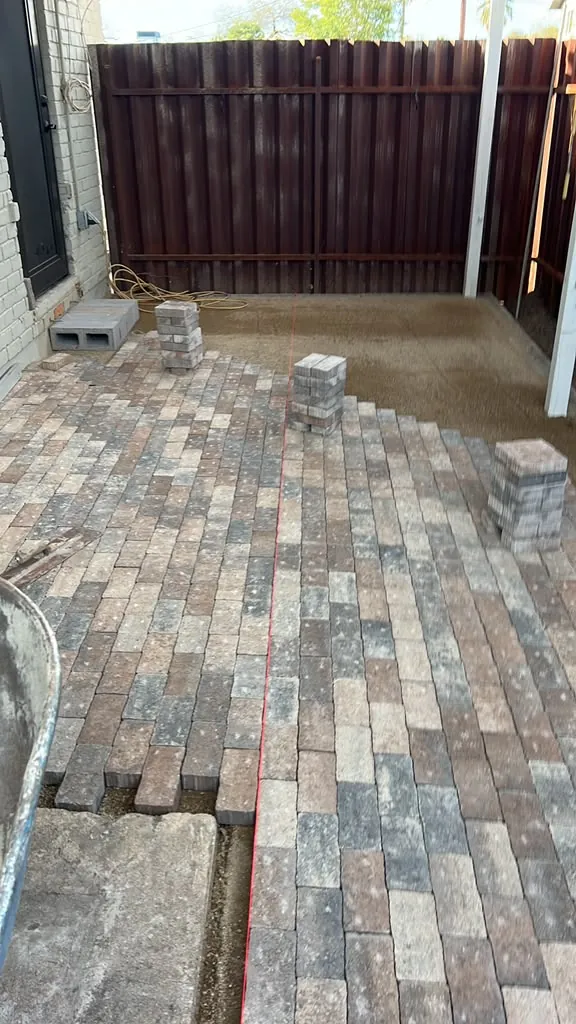
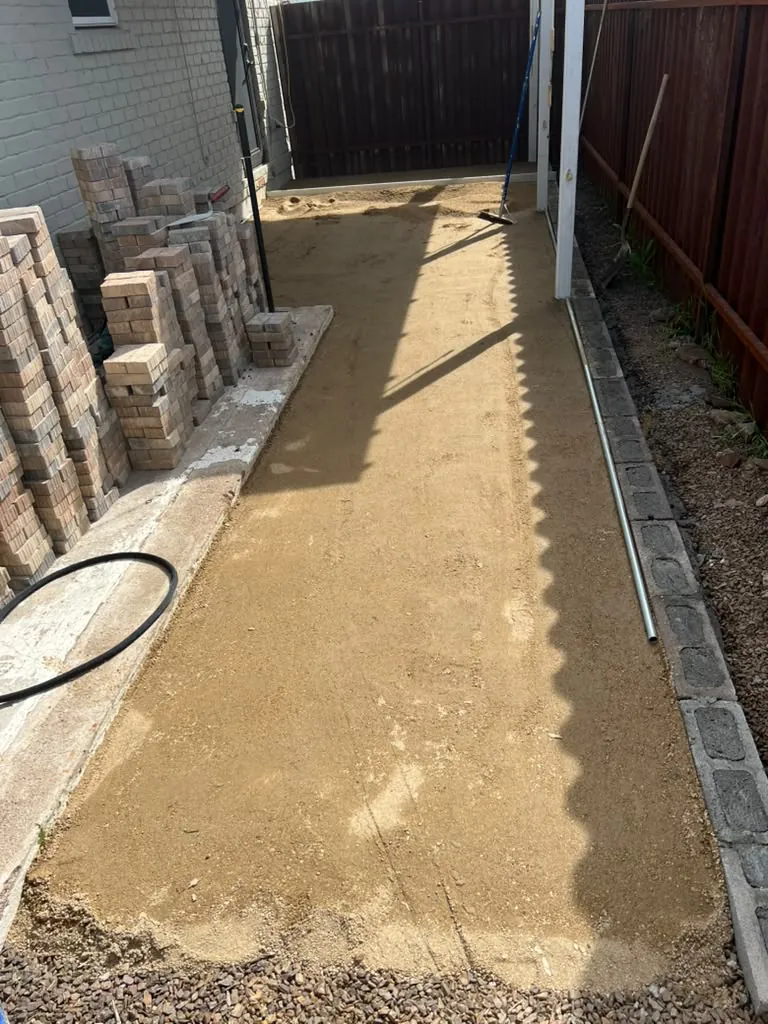
East Valley ground is a few inches of soft dirt over caliche, which sounds like a solid subgrade and behaves like one only until water gets into it. That is why the excavation depth is not the same for a driveway that parks a truck as it is for a back patio that holds a table and four chairs, and why the base gets compacted in layers instead of dumped in one lift and rolled once on top. Over the base goes about an inch of bedding sand, screeded flat and left alone — sand that gets compacted before the stone is set does not do its job. Pattern matters under weight: a running bond or a herringbone locks stones against each other so a tyre turning on the driveway cannot push one out of line, which is not a concern on a patio where the pattern is chosen purely for looks. Edges get cut on a saw to fit rather than forced with a wide joint, the restraint goes in spiked to the base, and joint sand is swept in and vibrated down so the joints are full to the top. The real advantage shows up years later: if a section settles or one stone gets stained, that piece lifts out and goes back down. A concrete slab with the same problem gets broken out.
The outline goes down in layout paint so you can walk the real size and shape before anything is dug.
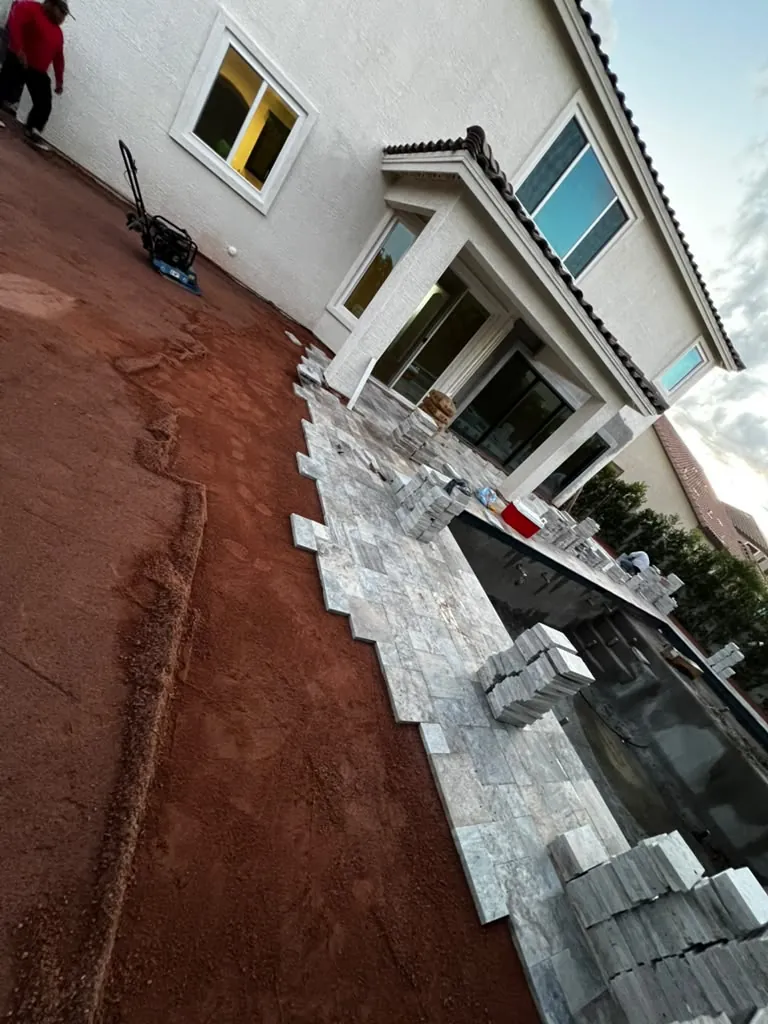
Material comes out to depth and aggregate goes back in compacted lifts, deeper where vehicles will drive.
Bedding sand is screeded to a flat plane and the pattern is laid across it, edges cut on the saw.
Edge restraint goes in, joint sand is swept across the field, and the whole surface gets vibrated down tight.
The East Valley is not one yard — a 1970s Mesa lot on old flood irrigation, a Gilbert build from 2005 and a San Tan Valley lot on raw desert are three different jobs.
Tell us what the yard needs — pavers, turf, concrete, a sprinkler zone that stopped, a palm nobody has touched in years — and send photos on WhatsApp if it is easier. We work in English and Spanish.
Call (480) 352-0711