Sprinkler and drip irrigation systems installed and repaired — heads, valves, controllers — in Mesa and all around it.
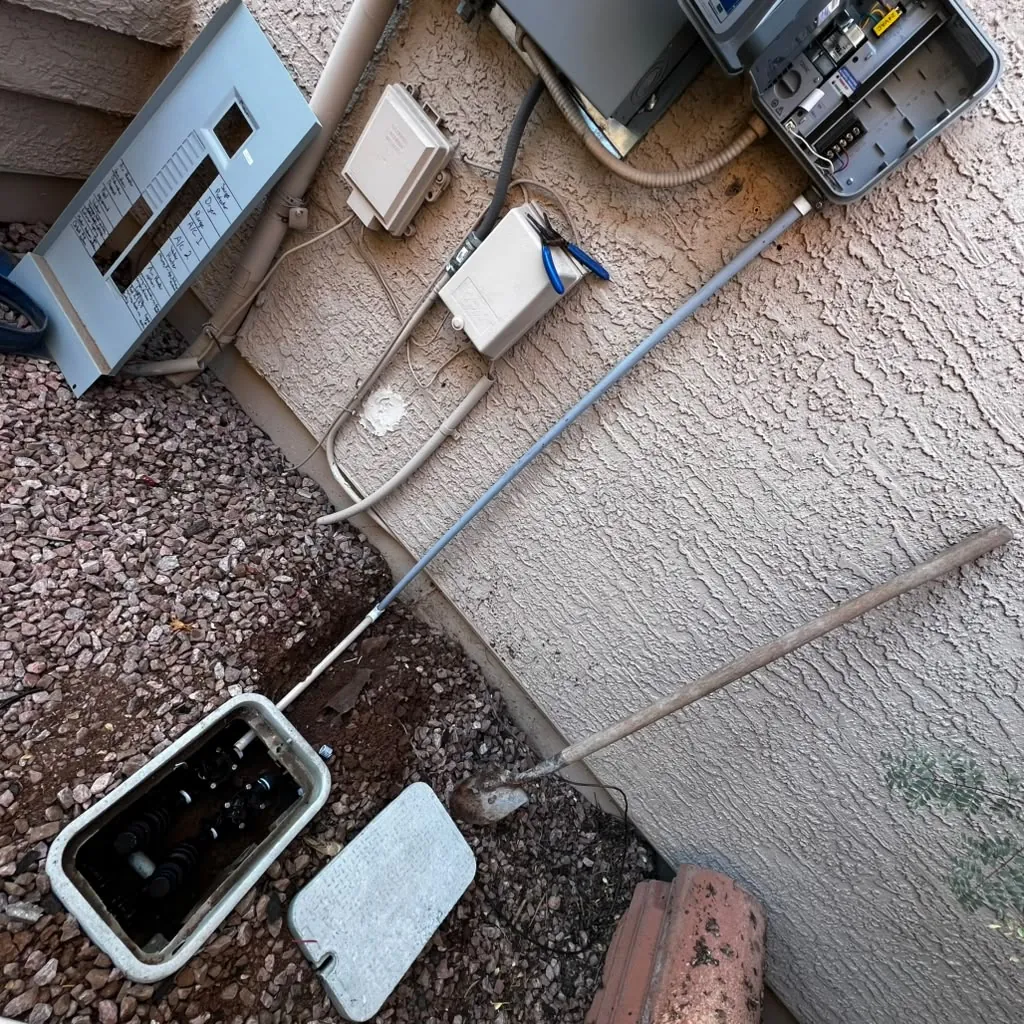
Sprinkler and drip irrigation systems, installed new and repaired. Two very different calls come in about sprinklers. One is a yard being rebuilt that needs a system put in from the valve manifold out — zones laid out, lines trenched, drip run to the trees and beds, a controller mounted and programmed. The other is a system already in the ground that has stopped doing what it was installed to do: a head snapped off at the riser, a zone that no longer comes on, a controller that lost its program after a power cut.
Primos Landscaping does both, on new landscaping and on systems that were put in long before anyone in the house moved in.
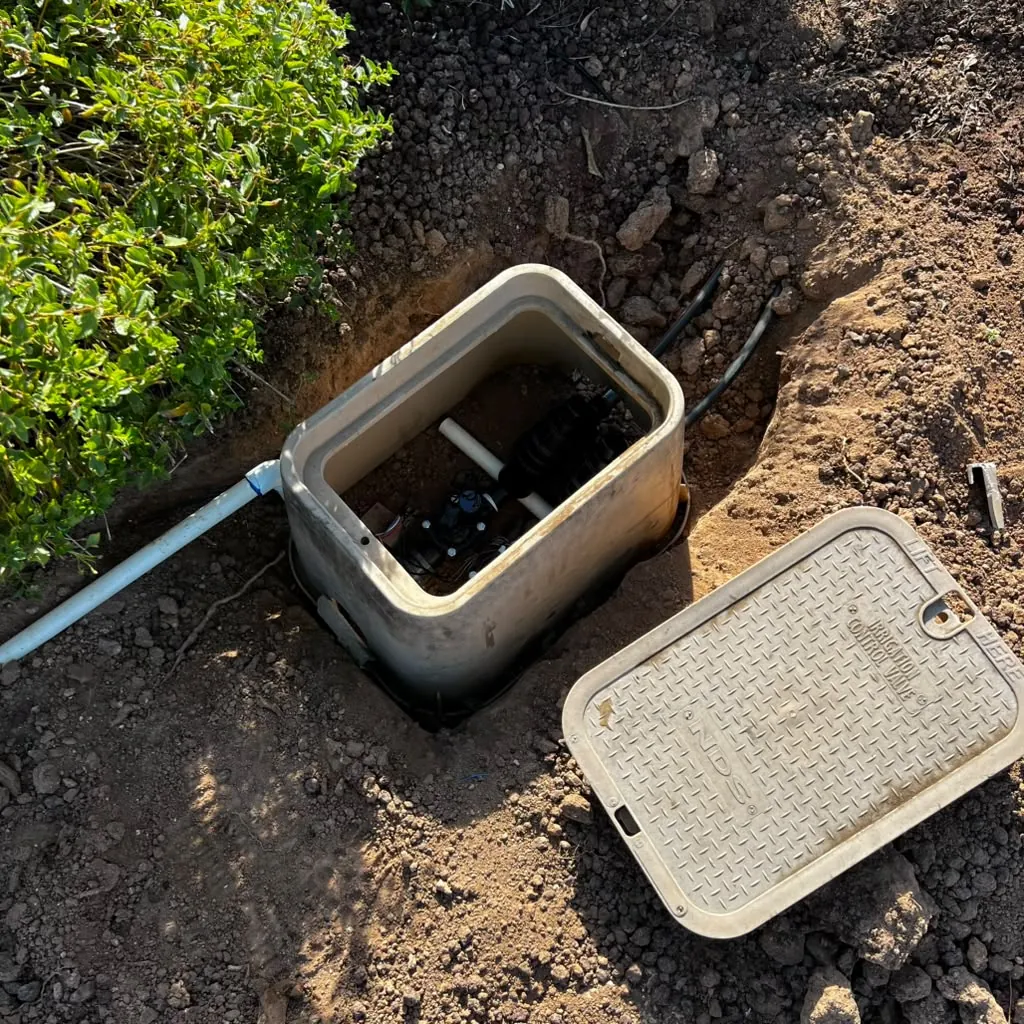
A new install is mostly decisions made before the trench opens. Zones get grouped so pressure is not split so thin that every head throws short, and so that plants with different water needs are not tied to the same run time — desert trees that want a deep soak every so often do not belong on the same valve as a bed of annuals. Under East Valley yards the caliche decides how deep a line can practically go, so trenching depth is a real choice rather than a number copied off a plan. The valve manifold goes in a box you can actually open and reach into, spray heads are set at finished grade and out of the path of a truck tyre or a trash bin, and drip emitters go out at the canopy edge sized to the plant rather than strapped against the trunk where the water never reaches the feeder roots. On repairs, the usual suspects are mechanical and visible once the zone is running: heads knocked over, risers snapped, nozzles clogged with grit, a head aimed at the block wall instead of the plants. A zone that will not open is a different chain — the solenoid, the wire back to the controller, or the diaphragm inside the valve, checked in that order before the valve body is condemned. And a controller still running the schedule it had in February is watering a June yard on the wrong clock, which is a five-minute fix that a lot of yards never get.
Each zone is turned on so you can both see what it is doing — which head is dead, which spray is hitting the wall, which zone never comes on.
For new work the zones and trench runs get laid out; for a repair the work is scoped to the part that failed.
Lines go in at a workable depth for the caliche, heads and emitters are set to grade and to the plants.
Every zone runs again with you watching the coverage, then the controller is set for the season.
The East Valley is not one yard — a 1970s Mesa lot on old flood irrigation, a Gilbert build from 2005 and a San Tan Valley lot on raw desert are three different jobs.
Tell us what the yard needs — pavers, turf, concrete, a sprinkler zone that stopped, a palm nobody has touched in years — and send photos on WhatsApp if it is easier. We work in English and Spanish.
Call (480) 352-0711