Shaping, thinning and palm skinning before the monsoon takes a limb — in Mesa and all around it.
Monsoon season sorts the trees in a neighbourhood into the ones that were thinned and the ones that were not. A palo verde or mesquite that put on fast growth through a wet spring is carrying a heavy, solid canopy by July, and a solid canopy in a fifty-mile-an-hour outflow behaves like a sail bolted to a trunk.
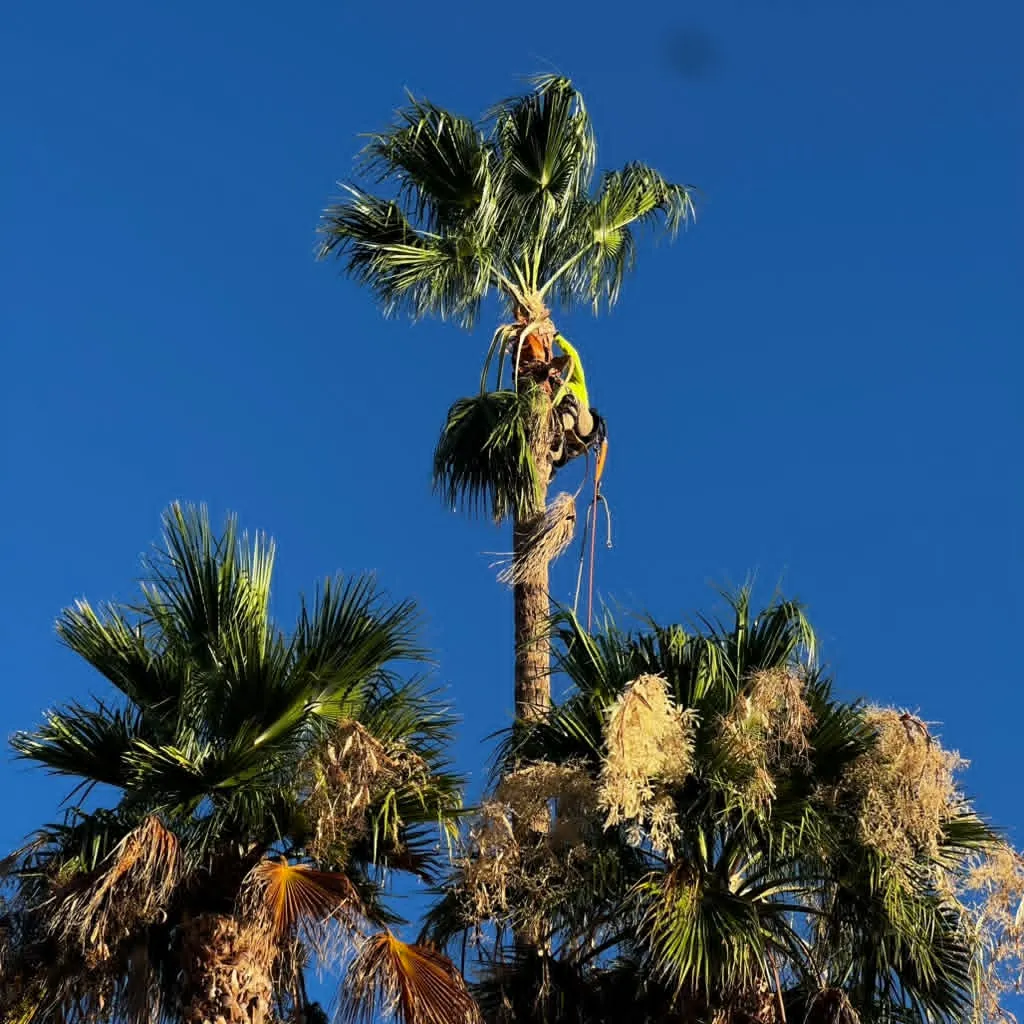
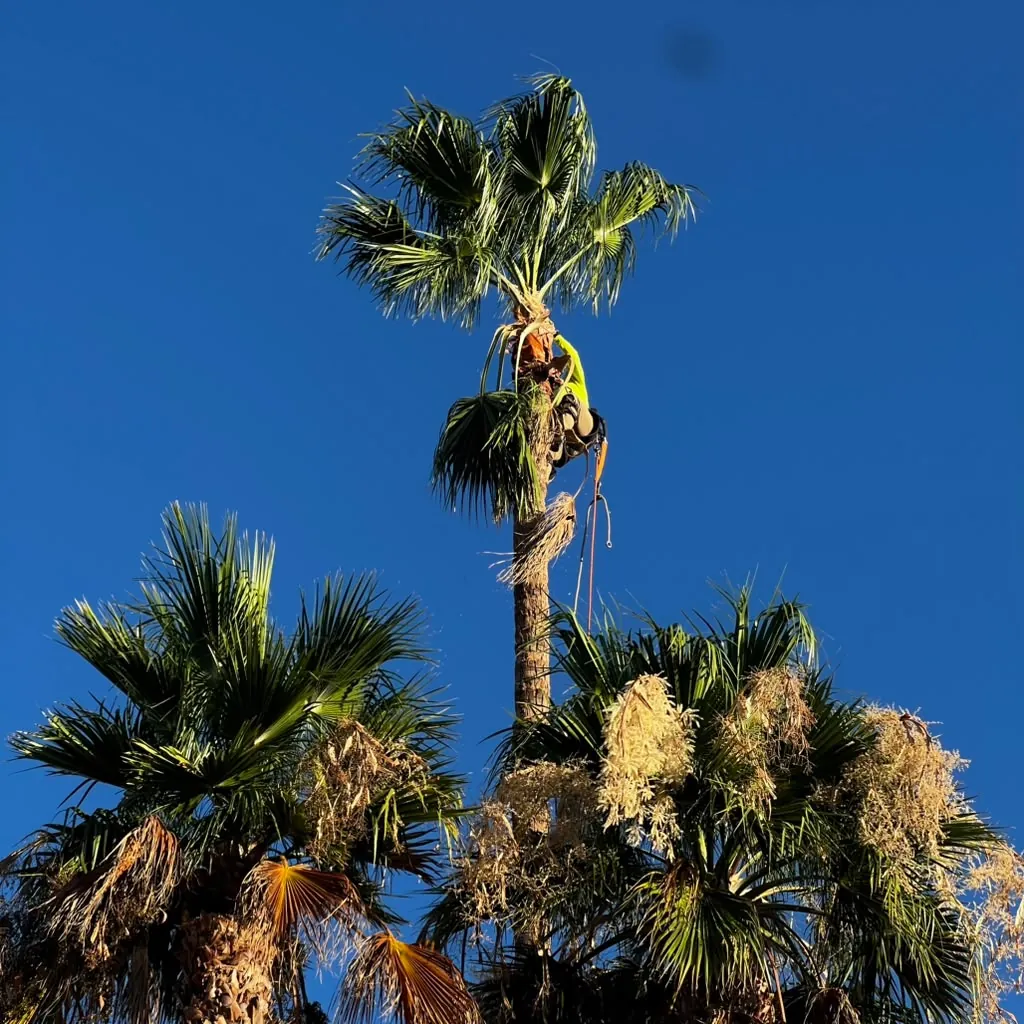
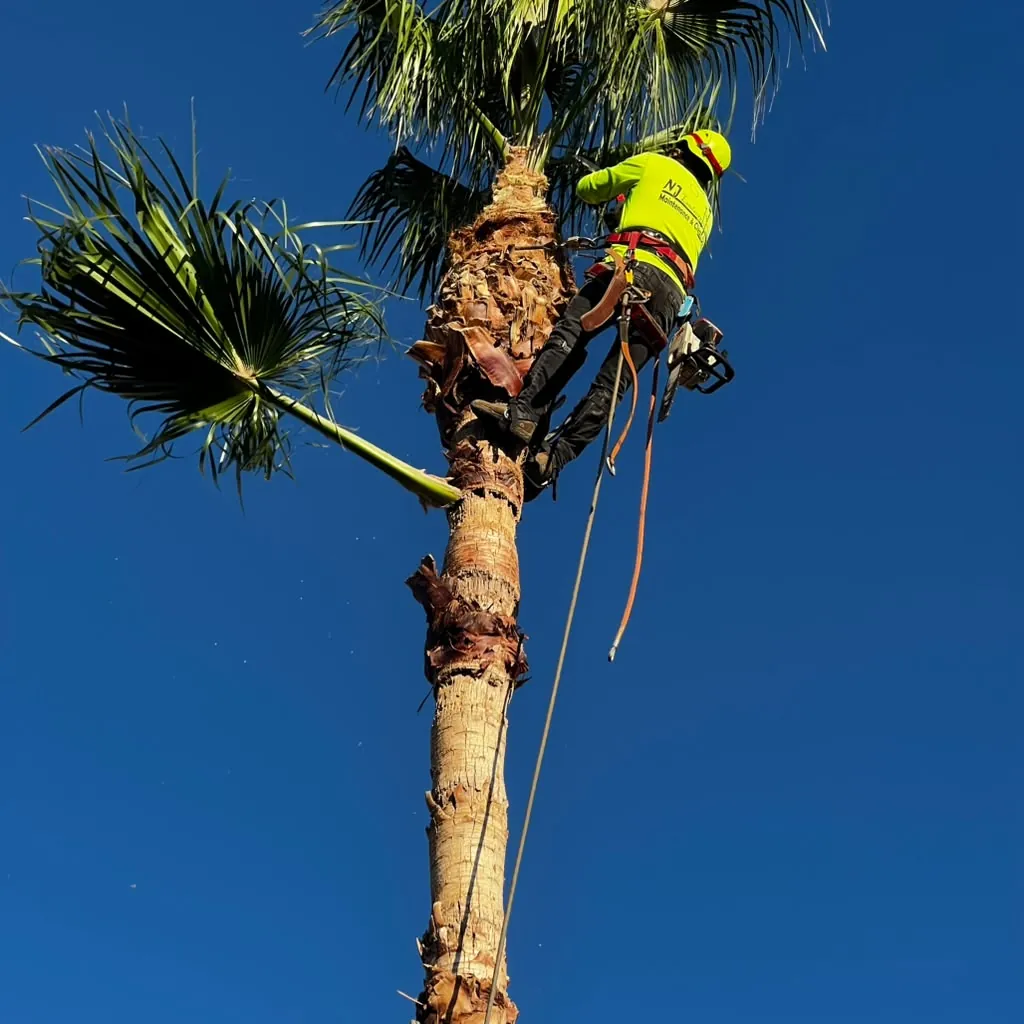
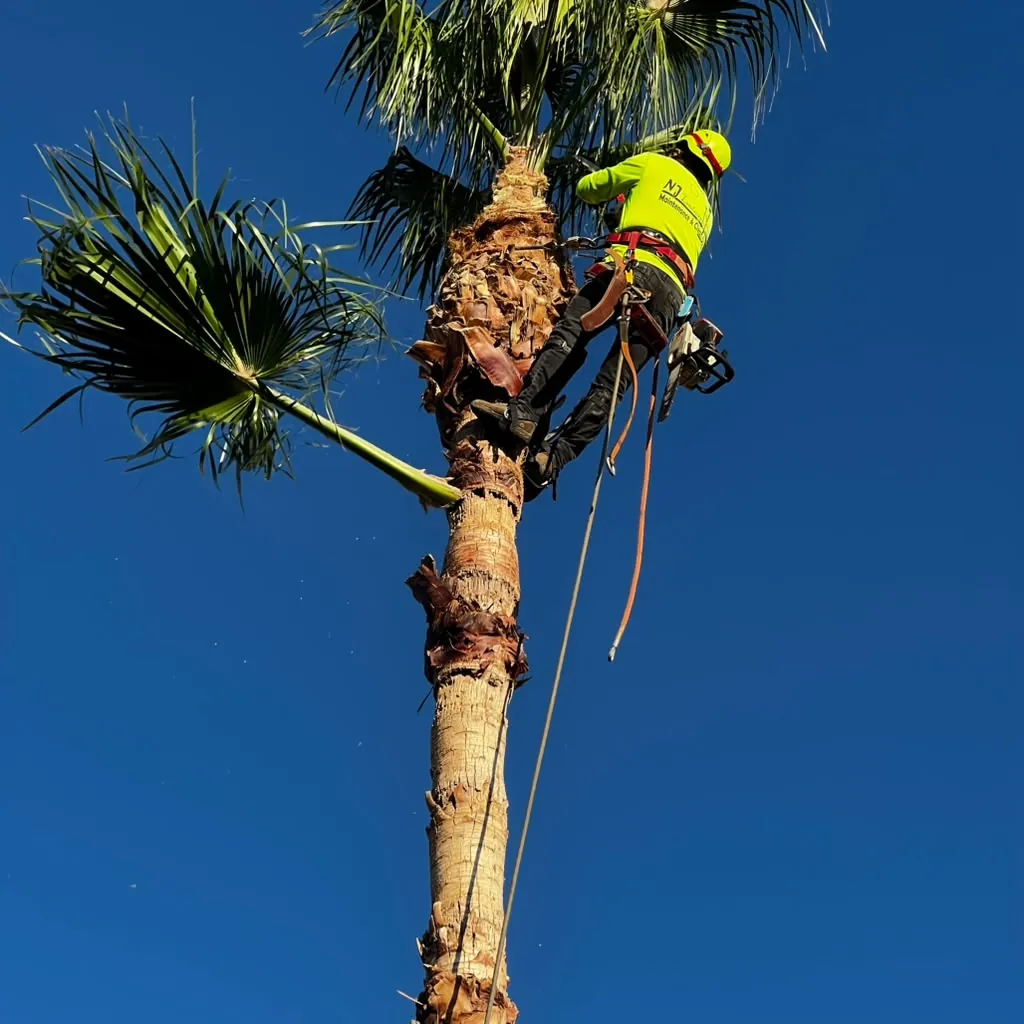
Trimming is about taking that load off in the right places — thinning so wind moves through the tree, lifting limbs off a roof, a driveway or a sidewalk, and cleaning palms before the dead fronds and date clusters come down on their own.
Thinning is not the same as cutting a tree back, and the difference is what people are usually unhappy about after somebody else has been out. Selective limbs come out of the interior so air passes through the canopy and the weight sits closer to the trunk, which leaves the tree its shape. Topping a shade tree — cutting the whole crown back to stubs — makes it look tidy for one season and then throws a mass of weak, fast, poorly attached regrowth that is more dangerous in wind than what was there before. Palms are cleaned rather than shaped: dead fronds pulled, date clusters and pods cut out before they drop into a pool or draw pests, and the crown left with enough green to keep the palm healthy instead of shaved into a narrow spike, which is a look that costs the tree. Citrus gets opened up in the middle so light reaches the interior and the fruit stays within reach from the ground. Clearance is its own kind of trimming — limbs lifted off a roof line and a tile edge, out of the way of a truck in the driveway, and back off the public sidewalk. Timing matters in this climate: shade trees are best thinned ahead of storm season rather than in the middle of it, and citrus is worked around its fruit. Everything cut gets loaded and hauled, not left stacked behind the wall.
Each tree is looked at for weight, lean, clearance and what is under it before anything is cut.
Thinning, lifting or palm cleaning is agreed out loud, so nobody is surprised by how the tree looks afterward.
Interior limbs come out to let wind through, clearance cuts are made, and palm crowns are cleaned without shaving them.
The yard is raked out and every cutting is loaded and taken away the same job.
The East Valley is not one yard — a 1970s Mesa lot on old flood irrigation, a Gilbert build from 2005 and a San Tan Valley lot on raw desert are three different jobs.
Tell us what the yard needs — pavers, turf, concrete, a sprinkler zone that stopped, a palm nobody has touched in years — and send photos on WhatsApp if it is easier. We work in English and Spanish.
Call (480) 352-0711