Driveways, patios, walkways and block walls washed back to their real colour — in Mesa and all around it.
A grey driveway is almost never dirty in one single way. There is oil where the car parks, a rust-orange fan where the sprinkler has been hitting the concrete for years, chalky calcium along the edge nearest the hose, and a general film of dust that arrived with the last haboob and never left.
Those come off differently, which is why pressure washing is less about pressure than about reading what is actually on the surface first. Primos Landscaping washes driveways, patios, walkways and block walls across the East Valley.
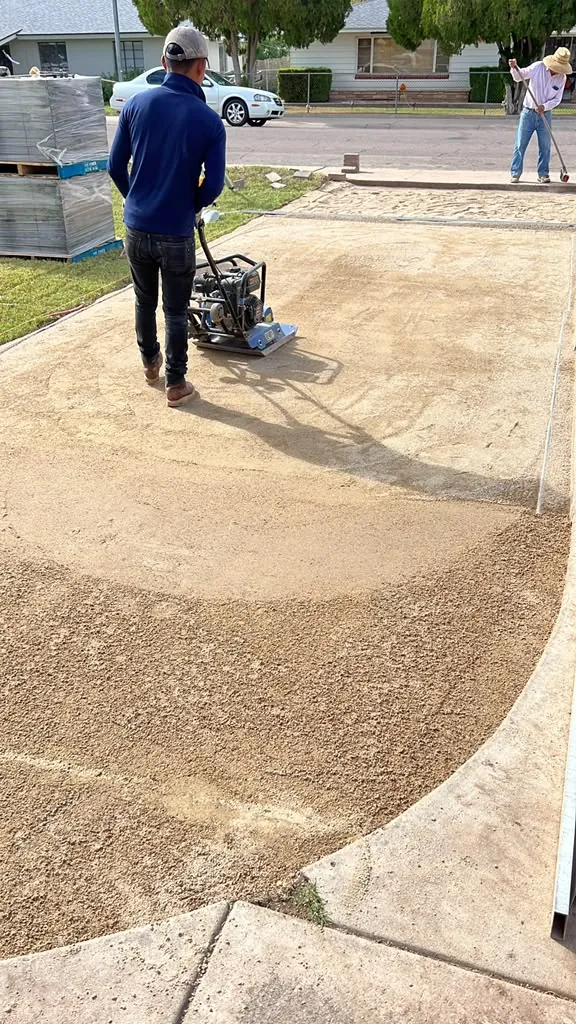
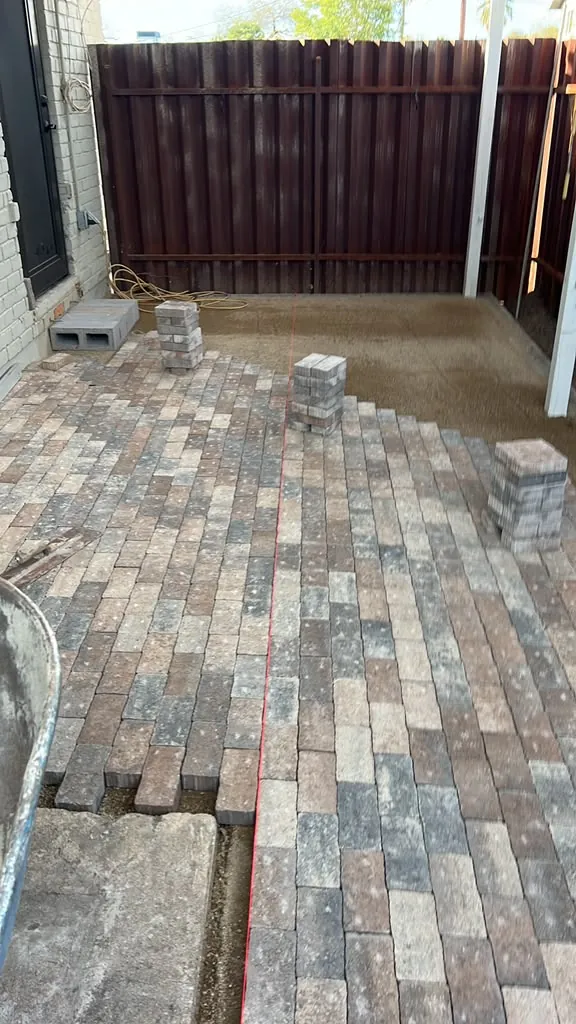
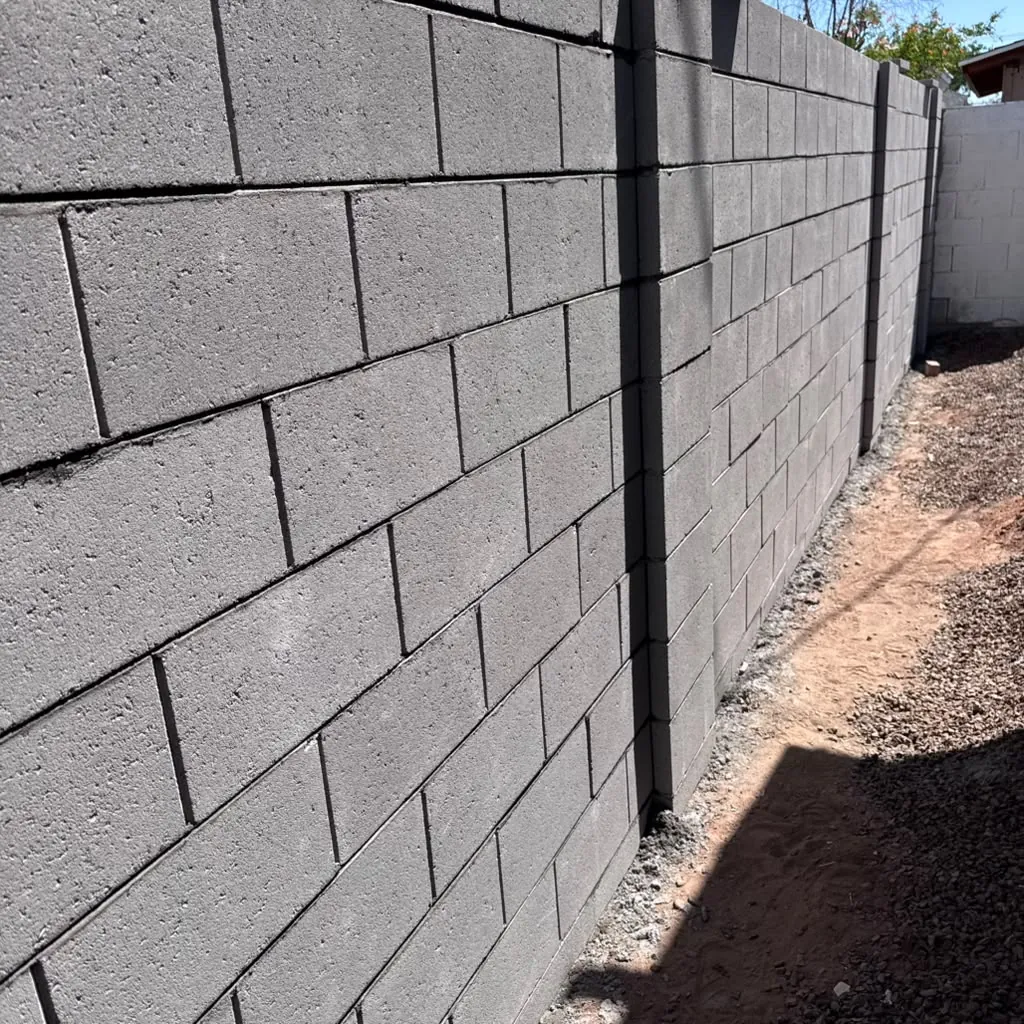
Concrete gets washed with a surface cleaner rather than a wand wherever the area allows it, because a spinning head covers a consistent width at a consistent distance and a wand waved back and forth leaves stripes that only show up once the slab dries. Oil and transmission drips are pre-treated and pulled out of the pore instead of blasted at, since raw pressure on an oil stain mostly drives it deeper and etches the surface around it. Irrigation overspray leaves two separate marks on East Valley concrete and block — hard-water calcium and the orange staining from iron in the water — and both are chemistry problems, not force problems. Shaded patios and north-facing walls grow the mildew and algae that a sunny driveway never gets. Pavers are the case where restraint matters most: too much pressure blasts the joint sand out from between the stones, and joints left empty let the field start moving, so a paver wash is done at a controlled pressure and the joints are re-sanded if they need it. Block and stucco walls take less pressure again than a driveway does. Rinse water gets directed away from planted beds rather than through them. And if a driveway is about to be sealed or a block wall painted, washing is the prep step that decides whether the coating on top of it holds.
Oil, calcium, rust staining, mildew and plain dust all come off differently, so the surface is looked at before anything is turned on.
Oil spots and mineral staining are treated and given time to work before the wash starts.
Concrete gets the surface cleaner, pavers and block get a lower controlled pressure, and rinse water is kept off the planting.
Paver joints are topped back up where the wash opened them, and the area is rinsed down clean.
The East Valley is not one yard — a 1970s Mesa lot on old flood irrigation, a Gilbert build from 2005 and a San Tan Valley lot on raw desert are three different jobs.
Tell us what the yard needs — pavers, turf, concrete, a sprinkler zone that stopped, a palm nobody has touched in years — and send photos on WhatsApp if it is easier. We work in English and Spanish.
Call (480) 352-0711