Leaks found and fixed, and new lines run for new projects — in Mesa and all around it.
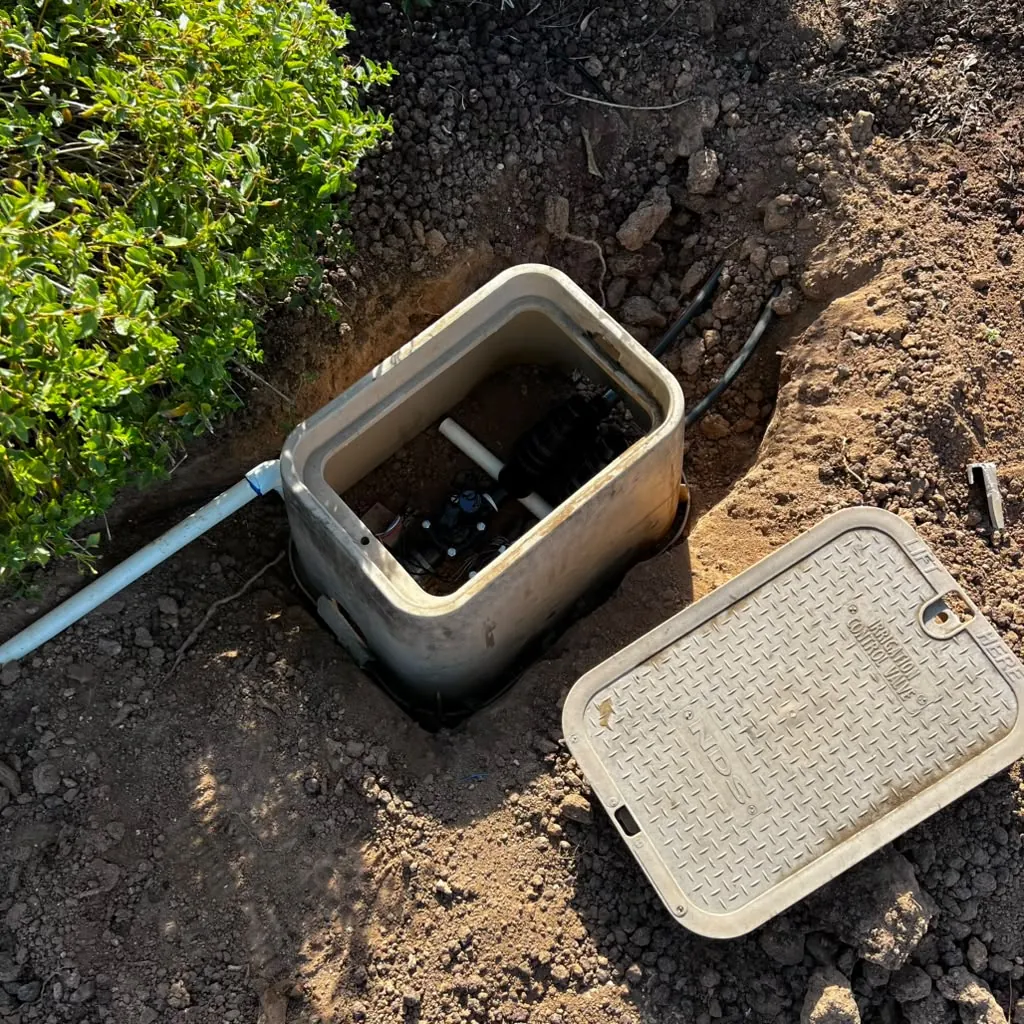
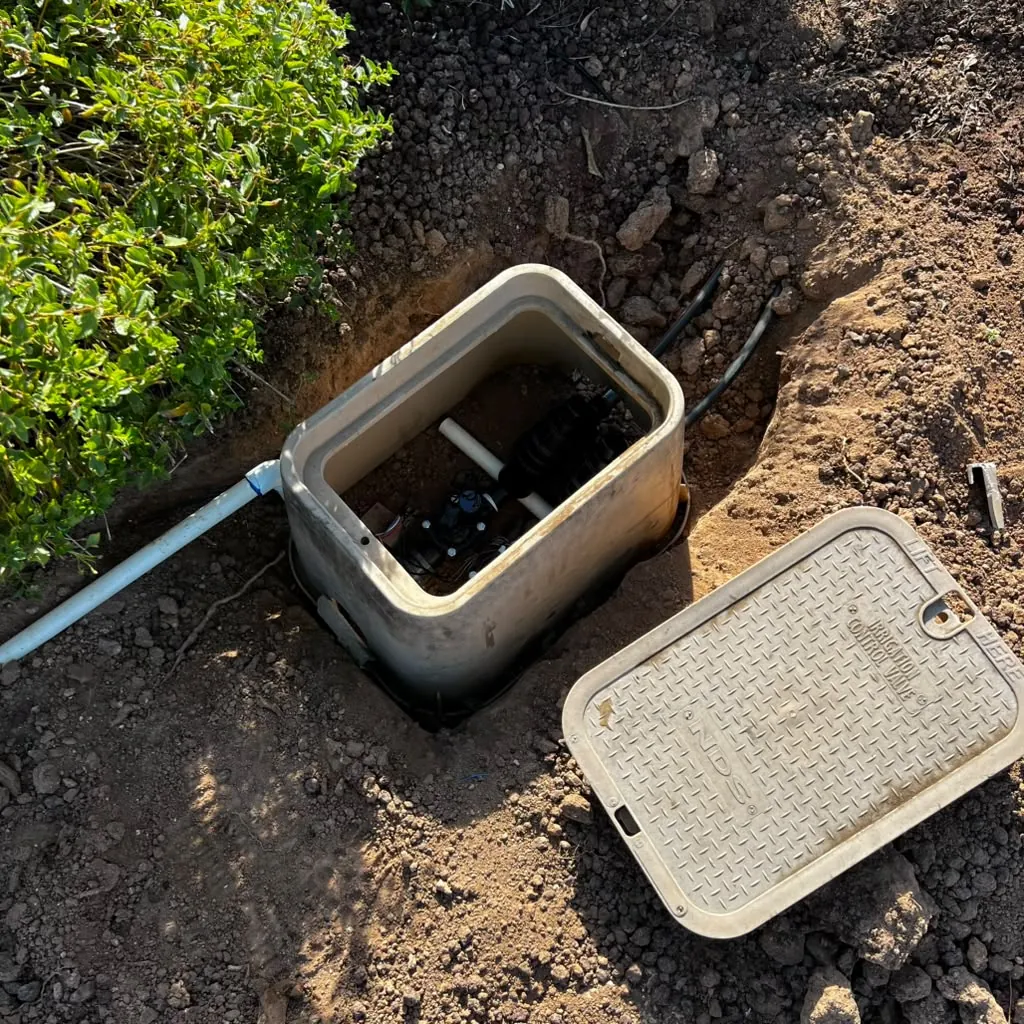
Most irrigation calls start the same way. The water bill climbed for no reason anyone in the house can point to, or there is a damp patch in the rock that never dries out even when nothing has run for two days. Underground that is usually a cracked lateral, a fitting that let go where the line turns, or a valve that no longer shuts all the way off. Primos Landscaping opens the ground where the water is actually coming from, fixes the break, and tests the zone before filling the hole back in.
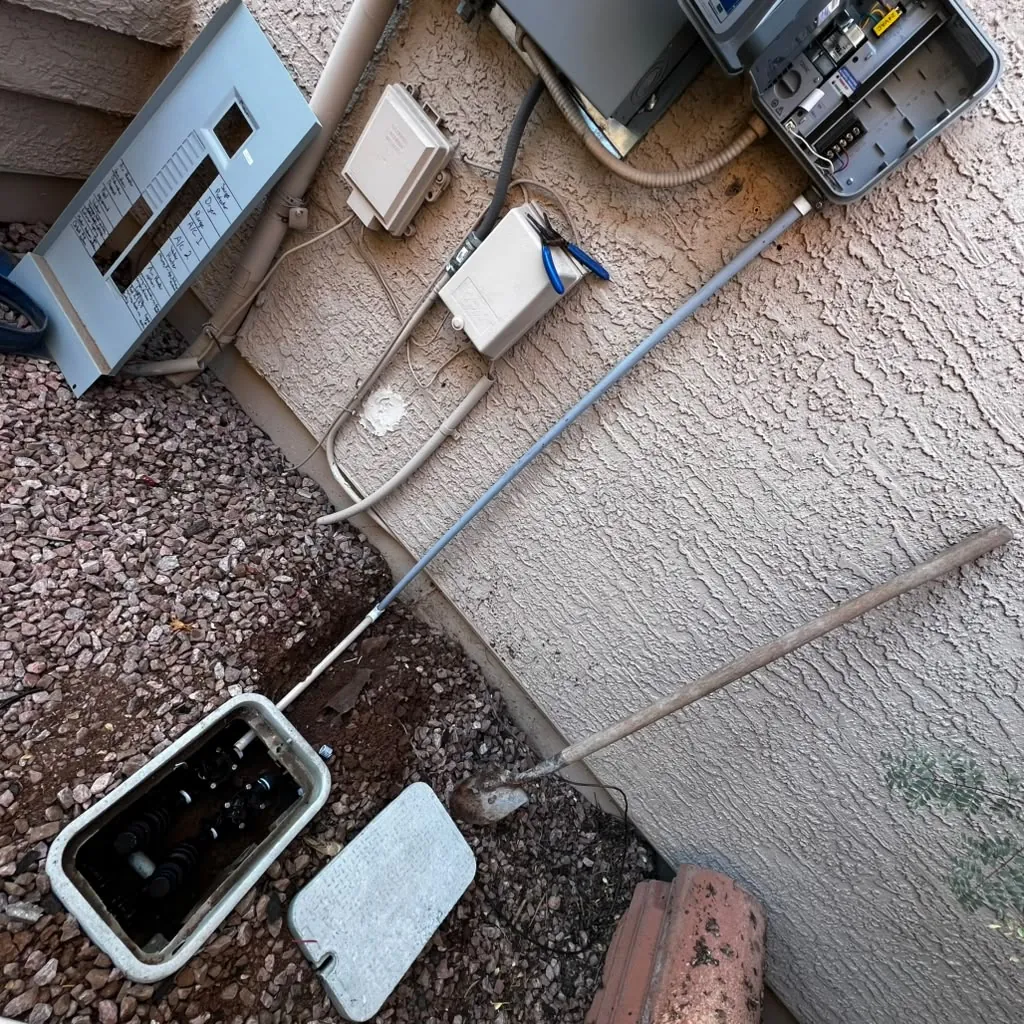
The other half of the work is new pipe. A new patch of grass, a new rock bed, planters along a wall, or trees that got planted where no water reaches all need lines run to them — and on an older flood-irrigated Mesa lot that means working out what is already buried out there before adding to it.
Under most East Valley yards there are a few inches of soft dirt and then caliche, hard enough that whoever installed the original system trenched as shallow as they could get away with. That is why a shovel, a fence post, or a stake driven in next to a young tree finds a lateral line so often. Locating the break means running each zone and watching where the water surfaces and where the pressure drops off, rather than opening a trench across the whole yard on a guess. A valve that will not close is a different animal — usually a torn diaphragm or grit that came down the line and lodged under the seat — and the solenoid and the wire are worth checking before anyone condemns the valve body. Drip conversions on the old flood-irrigated lots are their own problem: the yard was graded years ago to hold standing water, so once the grass is gone the low corner drowns one plant while the one uphill from it dries out. Emitters go at the drip line of the plant instead of against the trunk, sized to what is actually growing there, and the controller gets set for the season it is in rather than left on whatever it was doing back in February.
Each zone gets turned on so the system shows the problem itself — where water surfaces, which head is dead, which valve is weeping.
The line gets opened at the break, not across the yard, so the rock and plants around it stay where they are.
The repair goes in, then the zone runs again under pressure to confirm the leak is gone before anything is covered.
The hole is filled and tamped, rock goes back over it, and the run times get set for the season you are actually in.
The East Valley is not one yard — a 1970s Mesa lot on old flood irrigation, a Gilbert build from 2005 and a San Tan Valley lot on raw desert are three different jobs.
Tell us what the yard needs — a leak that won't stop, new grass, rock, a palm nobody has touched in years — and send photos on WhatsApp if it is easier. We work in English and Spanish.
Call (480) 352-0711